
Keywords
Humulus lupulis
medicinal
harvest
beer
How to Cite
Abstract
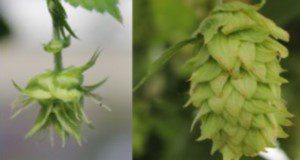
Hops (Humulus lupulus) are perennial plants commonly harvested for their mature strobiles, also referred to as cones, which are primarily dried and used as a bittering agent and preservative in beer production. The two primary factors of harvest timing and harvest method can have large impacts on the quality and economics of the finished product. The decision of when and how to harvest is important and should rely upon growing-region-specific environmental conditions, physical observations of the cones, and the wants and needs of the individual producer. This new 4-page publication of the UF/IFAS Environmental Horticulture Department describes the primary methods used in hop harvesting, including field, indoor, and machine harvesting. Written by Sean Michael Campbell and Brian J. Pearson.
https://edis.ifas.ufl.edu/ep578
References
Ahmed, A. E., and A. O. M. Alam-Eldin. 2015. "An Assessment of Mechanical vs Manual Harvesting of the Sugarcane in Sudan—The Case of Sennar Sugar Factory." Journal of the Saudi Society of Agricultural Sciences 14(2): 160–166. https://doi.org/10.1016/j.jssas.2013.10.005
Carter, P. R., E. A. Oelke, A. R. Kaminski, C. V. Hanson, S. M. Combs, J. D. Doll, G. L. Worf, and E. S. Oplinger. 2018. Hop, Alternative Field Crops Manual. University of Wisconsin Cooperative Extension Service.
Gorst Valley Hops. n.d. "Hop Harvesting and Processing: Harvesting to Drying to Processing—Methods Overview." PowerPoint Slideshow. https://jhawkins54.typepad.com/files/hop-harvesting-and-processing-gorst-valley-hops.pdf.
Kneen, R. 2001. Small Scale & Organic Hops Production. Left Fields BC.
Miller, S. 2017. FAQs for starting up a hop farm in New York. Cornell Cooperative Extension Madison County.
Unless otherwise specified, articles published in the EDIS journal after January 1, 2024 are licensed under a Creative Commons Attribution-NonCommercial-NoDerivs 4.0 International (CC BY-NC-ND 4.0) license.